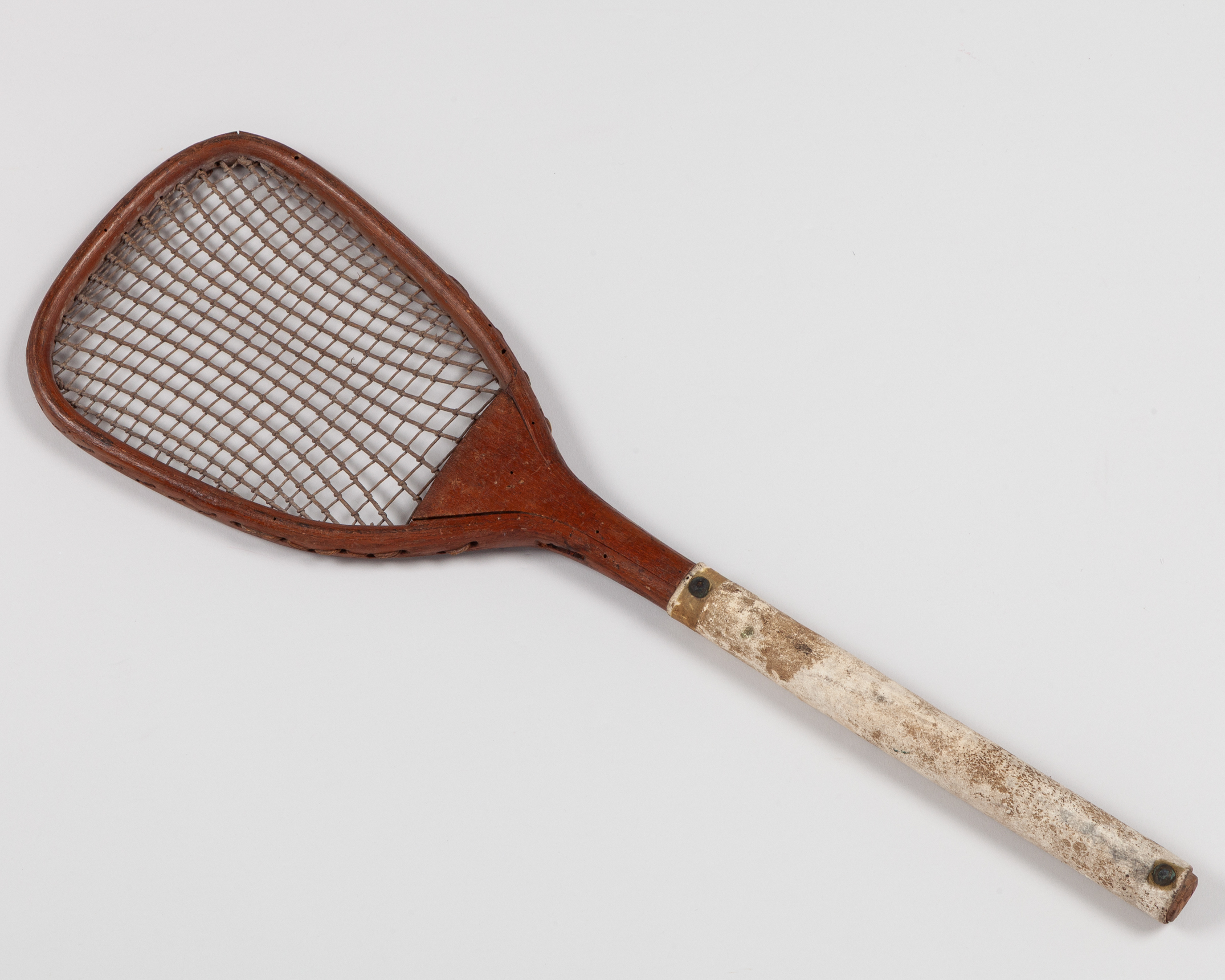
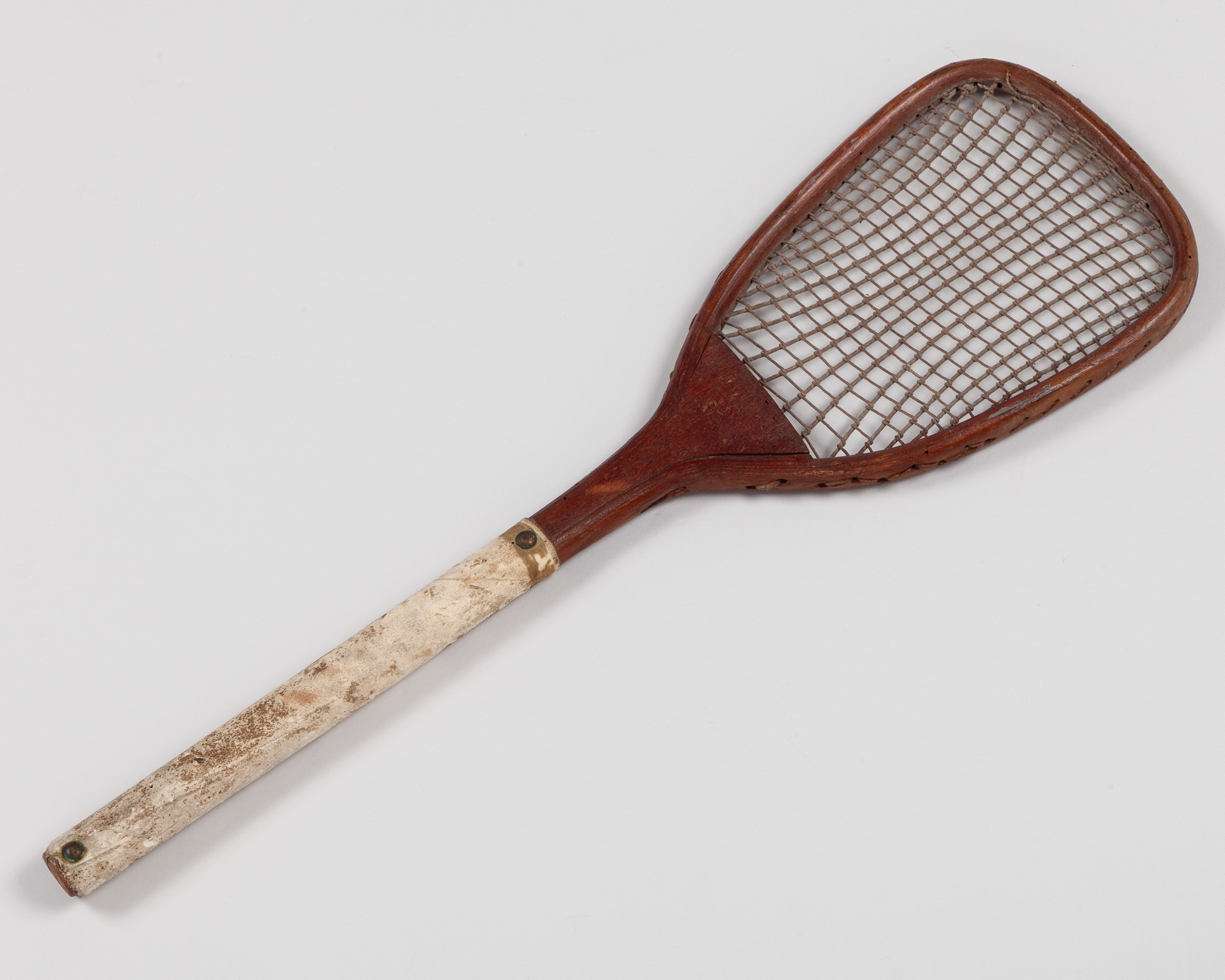
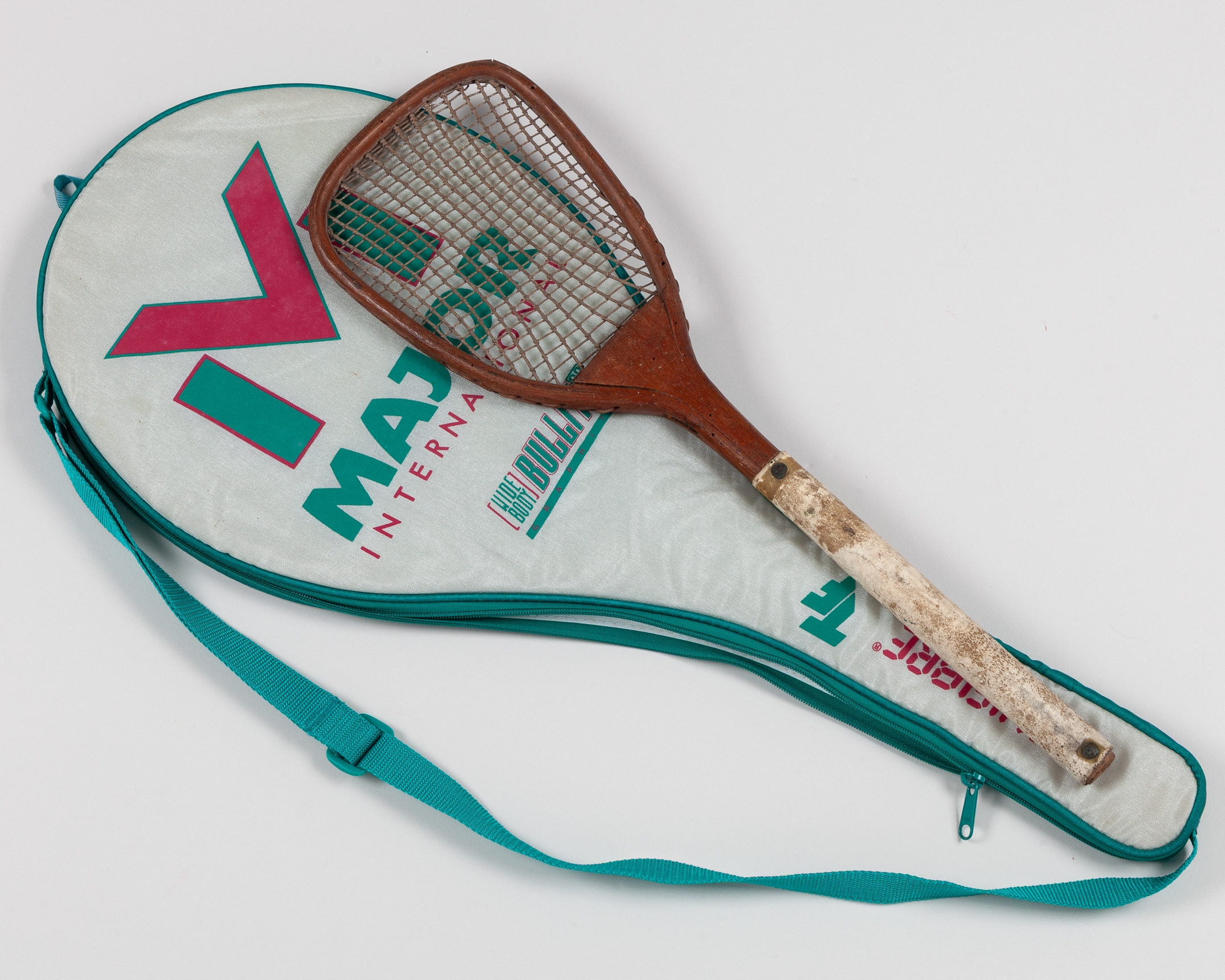
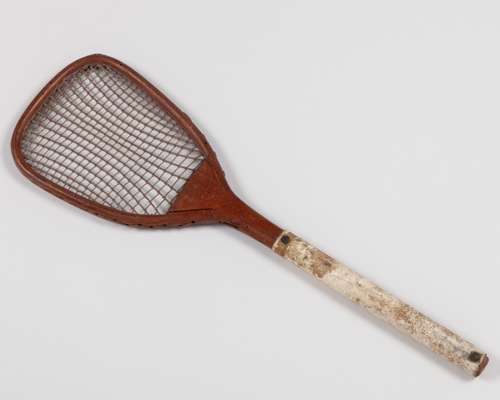
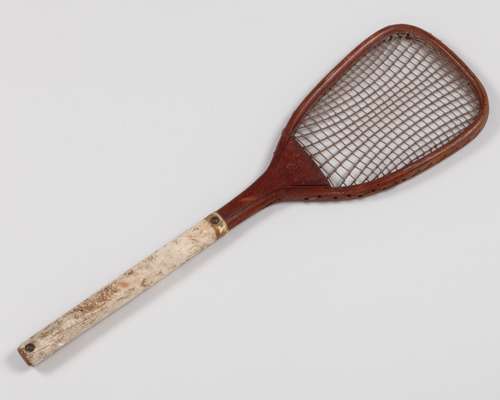
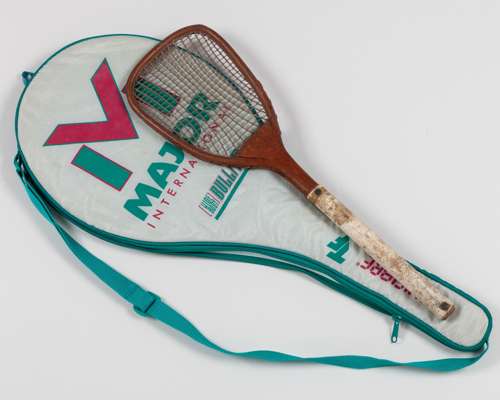
Rare seminal demi-paume 18th century real tennis racquet by Antoine Henry MASSON (1735-1793)
Rare and important demi-paume 18th century real tennis racquet by Antoine Henry MASSON (1735-1793), not stamped
paumier-raquetier (racquet maker) to King Louis XV of France, Antoine Henry Masson’s quality as a paumier-raquetier had been recognised from the age of 9 and by the 1750s he had come to the attention of the King of France. He played in matches within the Court of France, and was a maker of racquets and balls and was officially Paumier to King Louis XV, the Prince of Condé and the Duke of Chartres. Masson purchased the tennis court on the rue de Grenelle-Saint-Honoré in Paris on 21st February 1778 from his brother-in-law Jean Pierre Barcellon, son of Guillaume Barcellon. He also bought the tennis court on rue Mazarine in Paris. Masson is considered the world champion between 1765 and 1785. Mannevieux wrote in his book in 1783 “the famous Masson, from his youth, surpassed the virtuosos of the great players of the years 1745-1755.” In April 1767 he embarked to play in London and on 16th April contested against the best English players and it was on this occasion that the artist John Hamilton Mortimer (1740-1779) painted Masson’s portrait, the subject seen in playing dress and holding what appears to be a very similar racquet to the one being offered here.
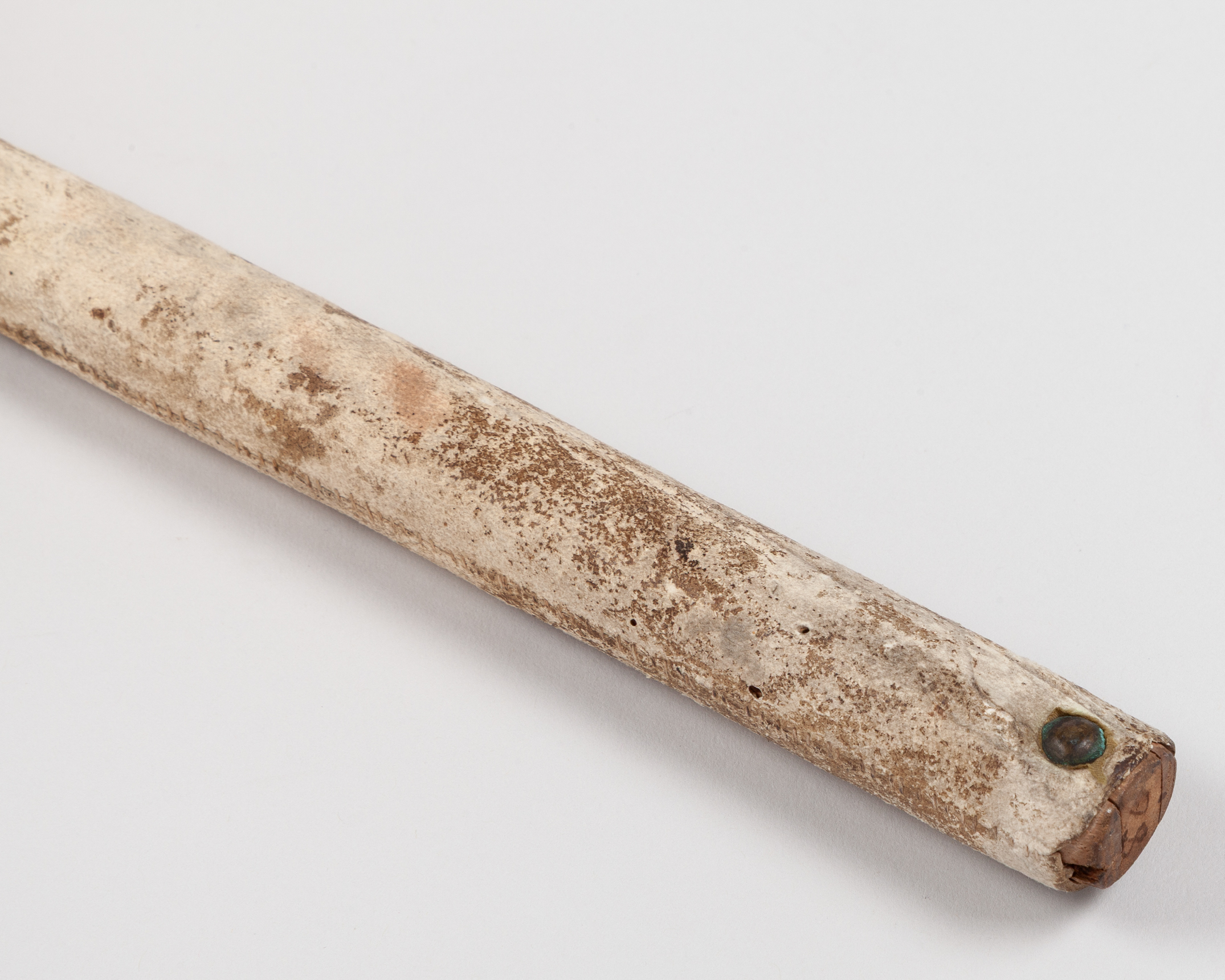
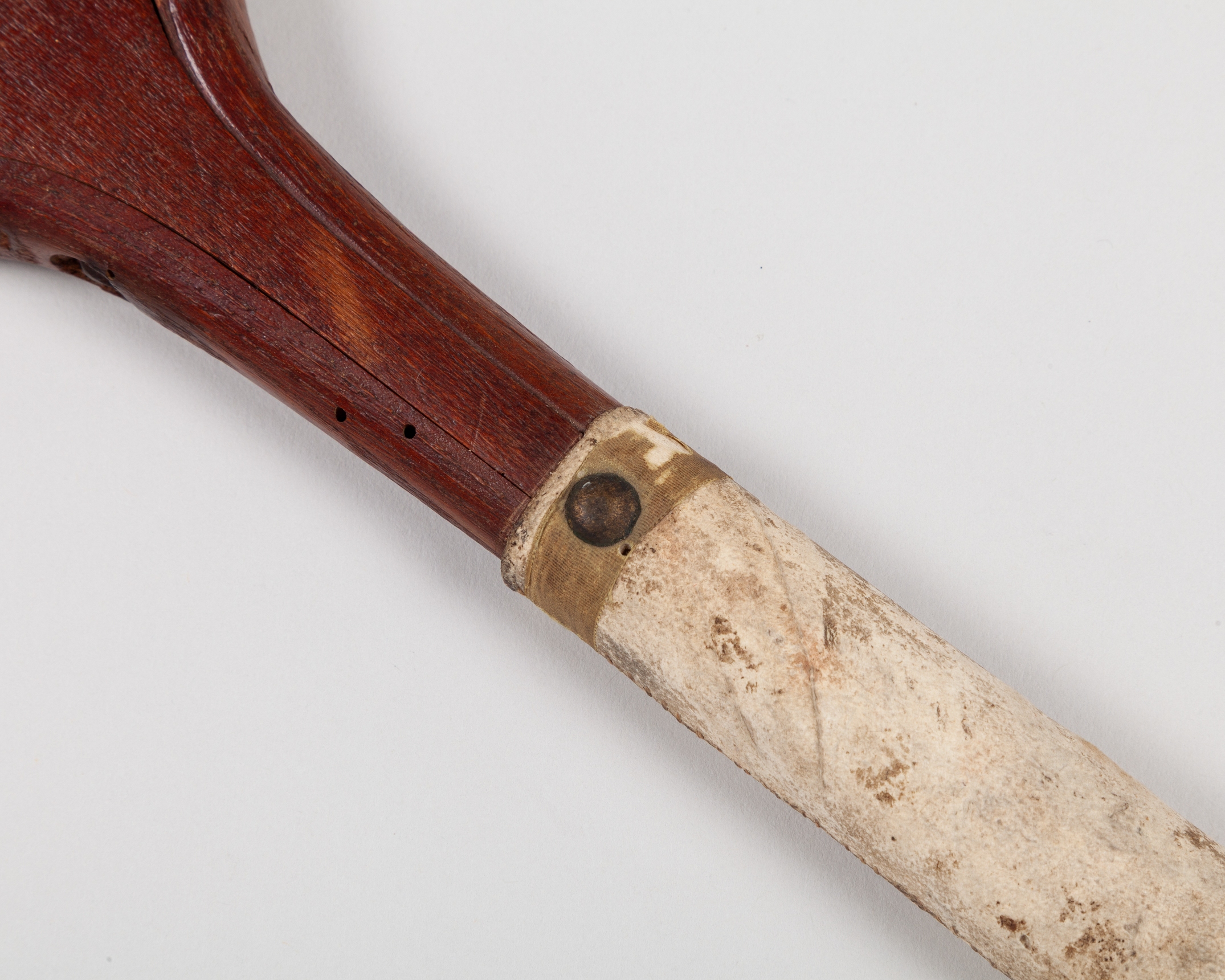
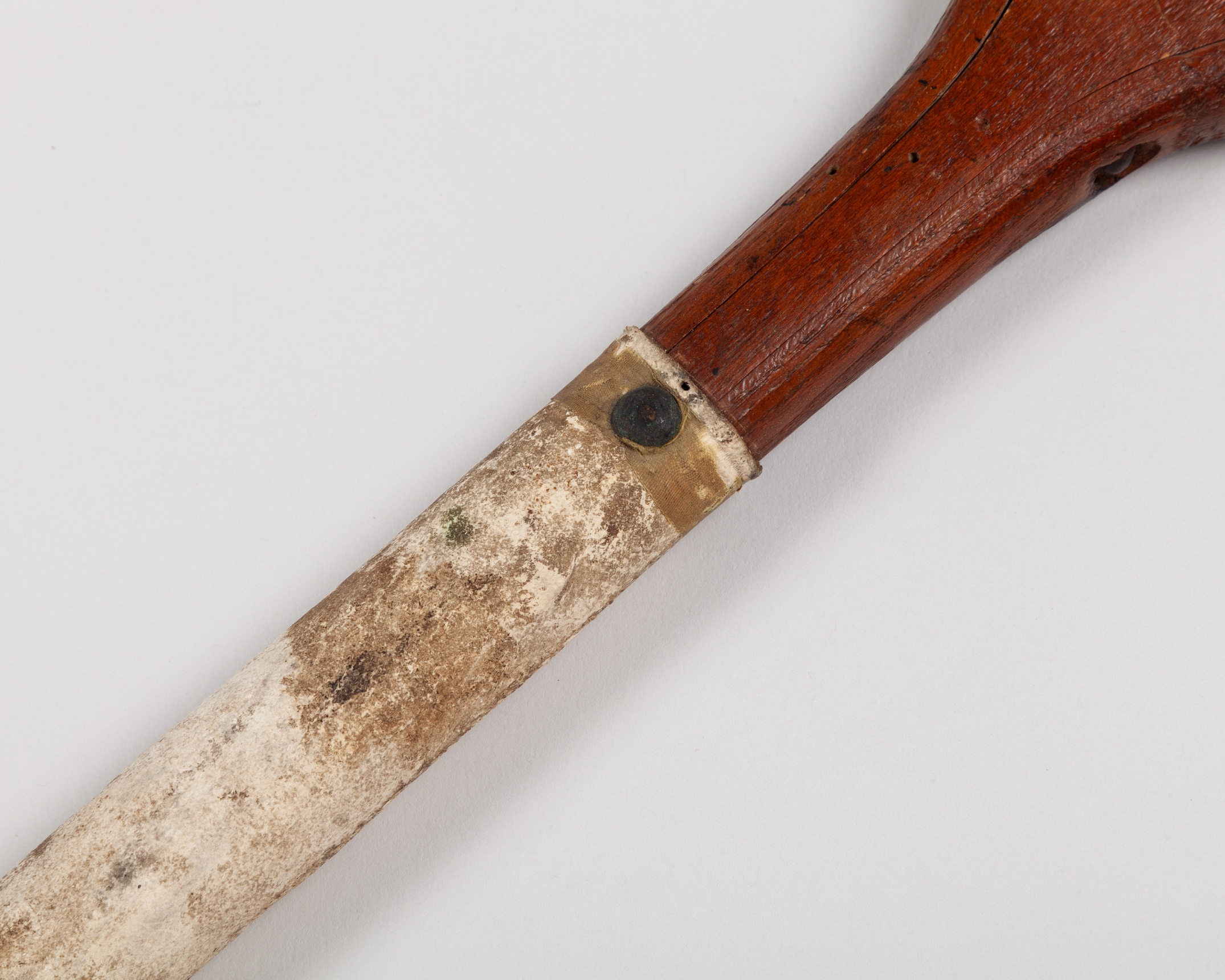
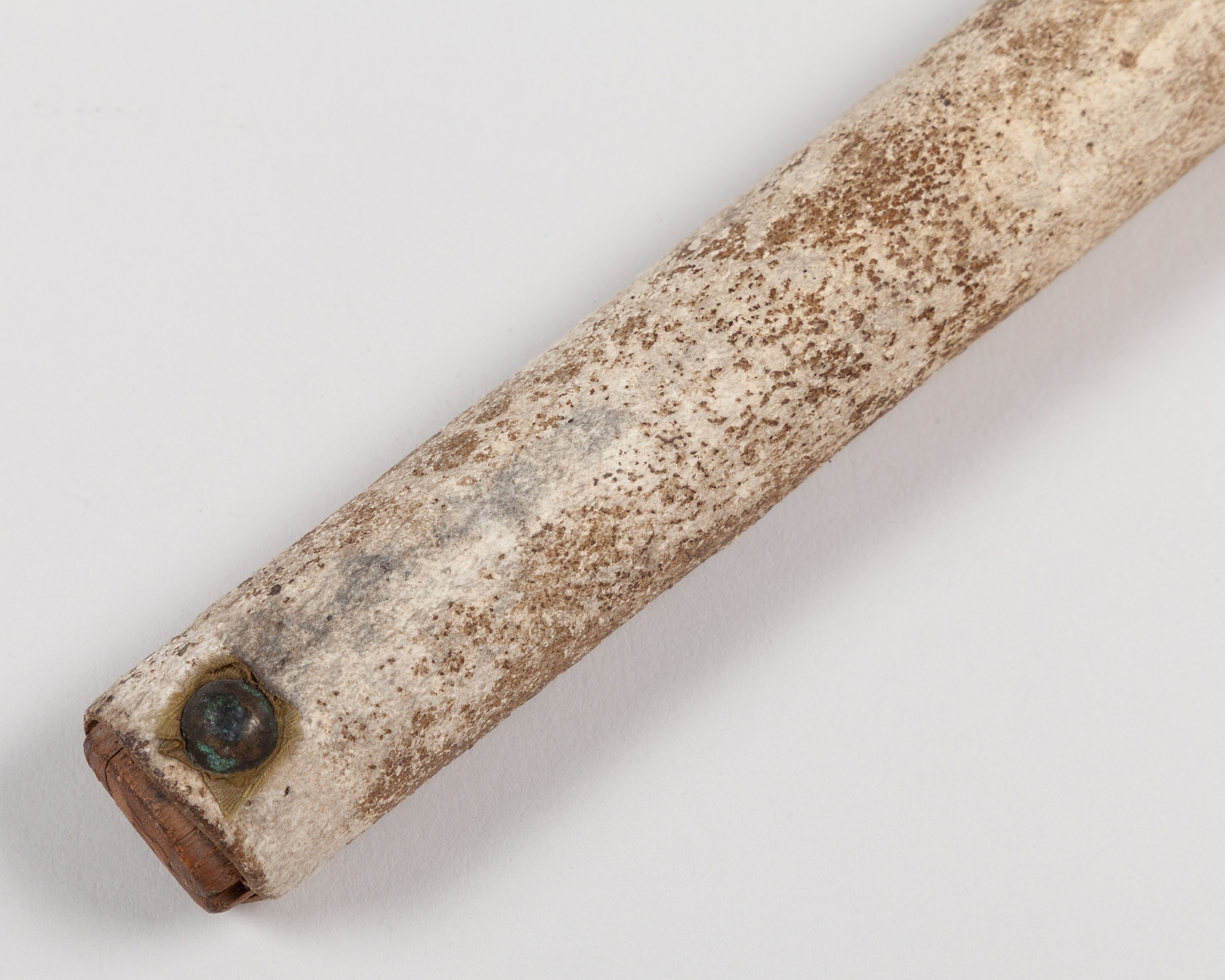
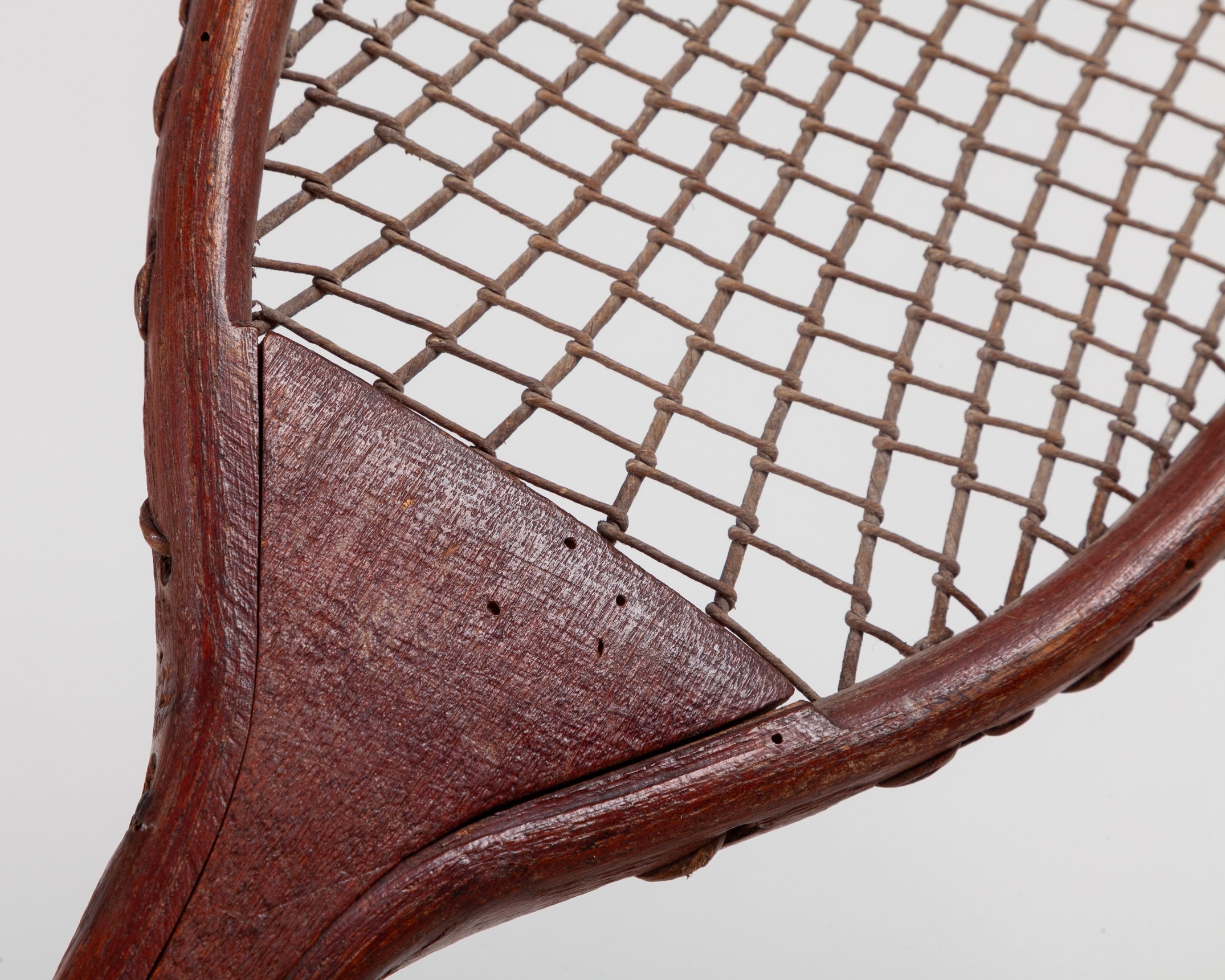
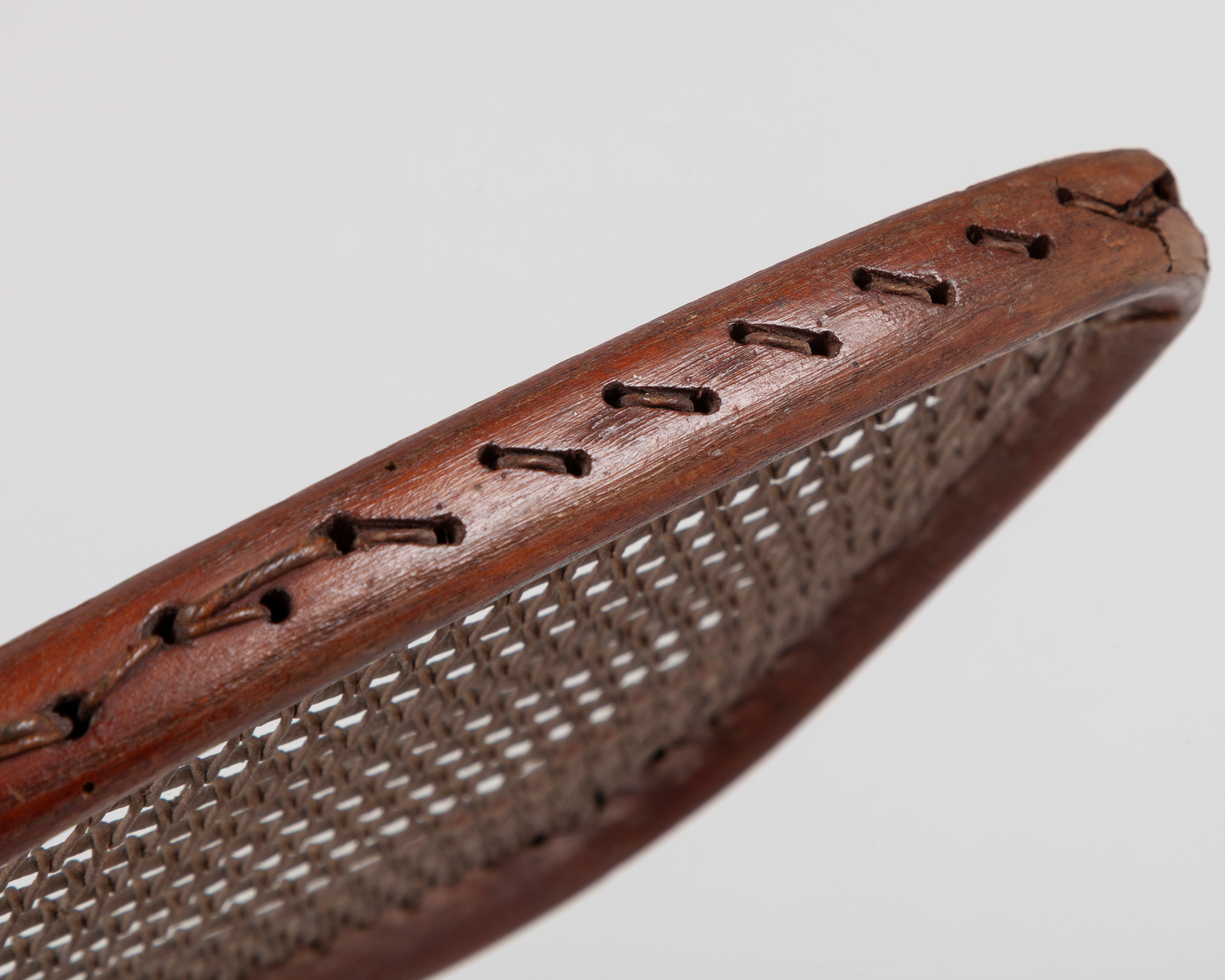
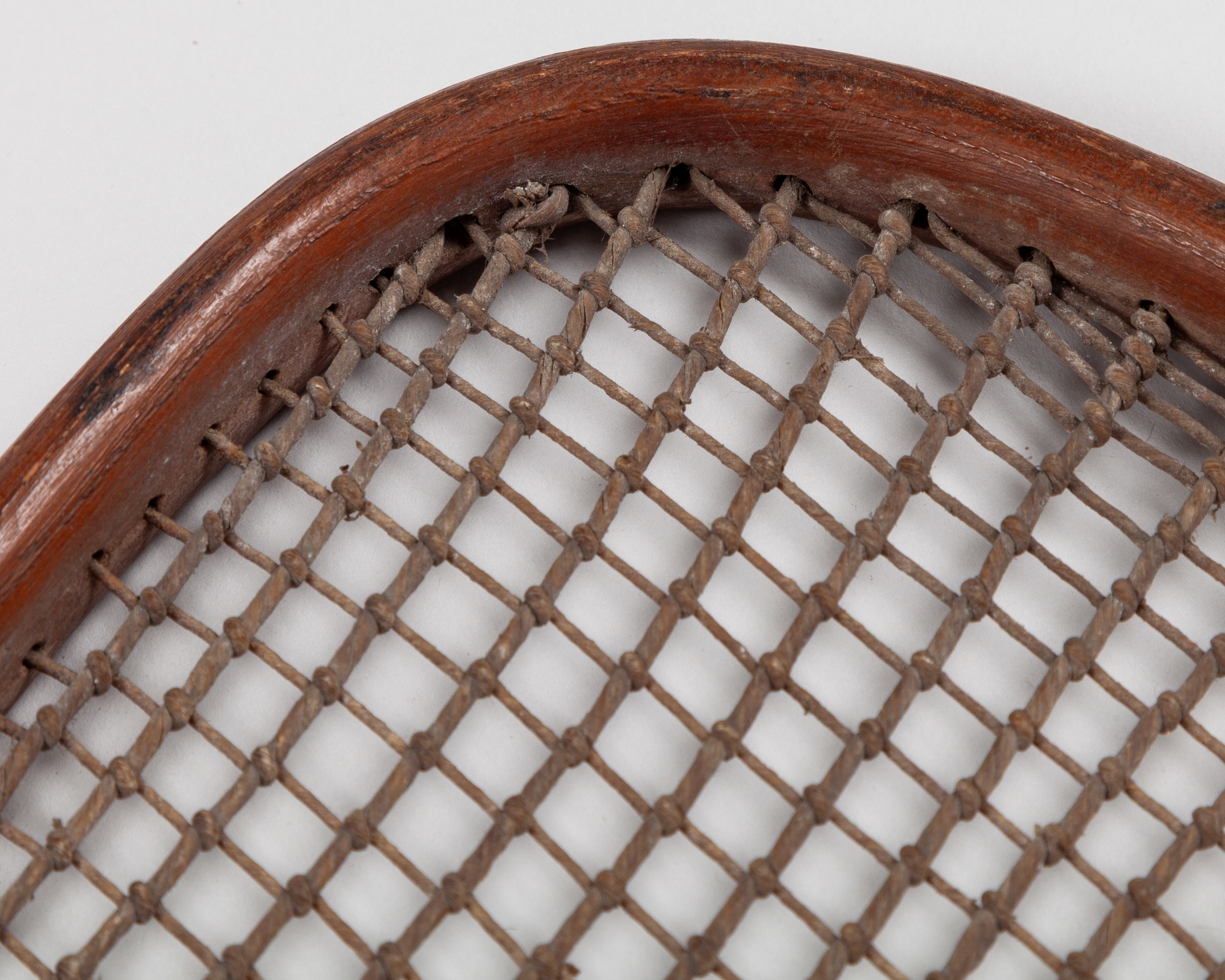
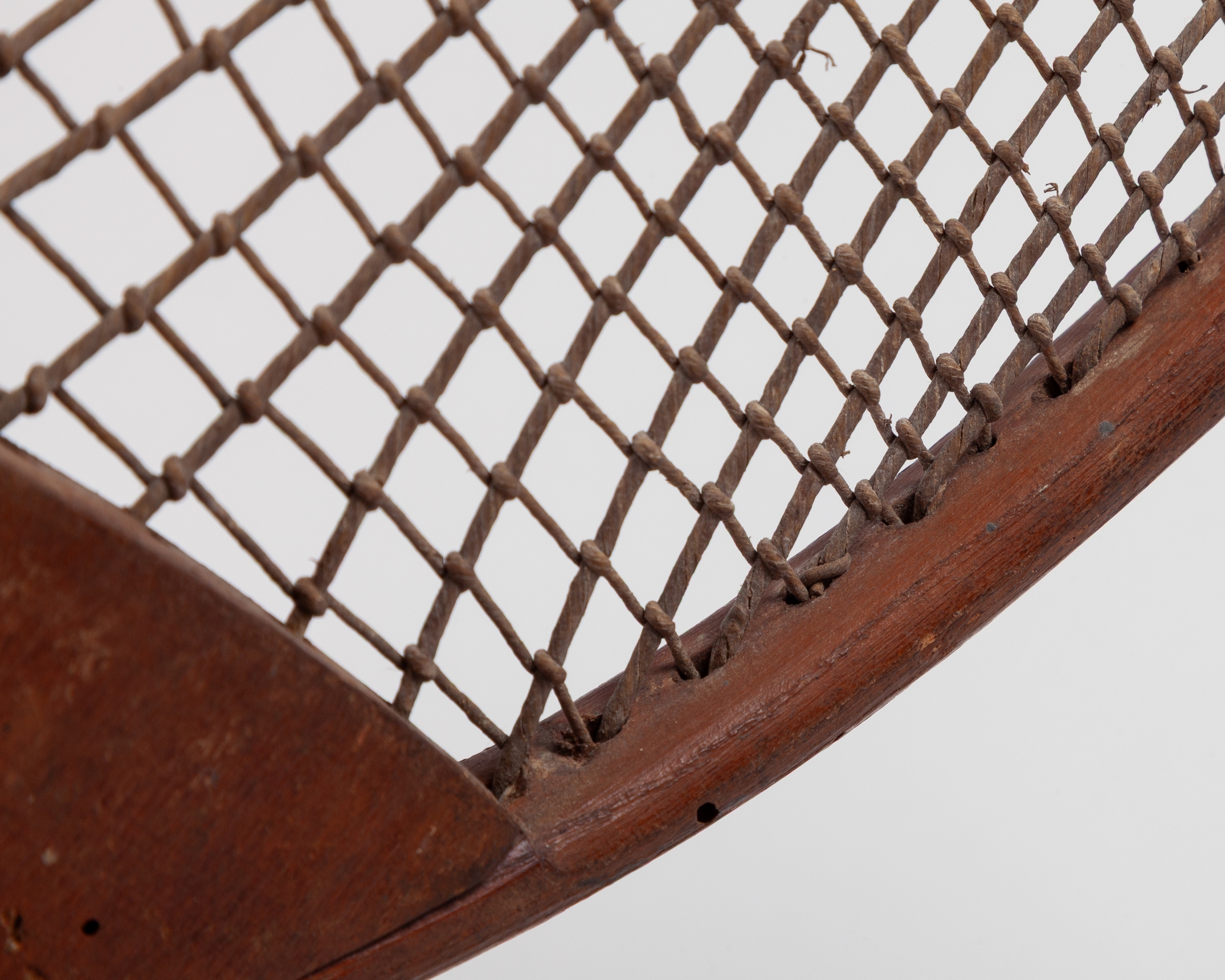
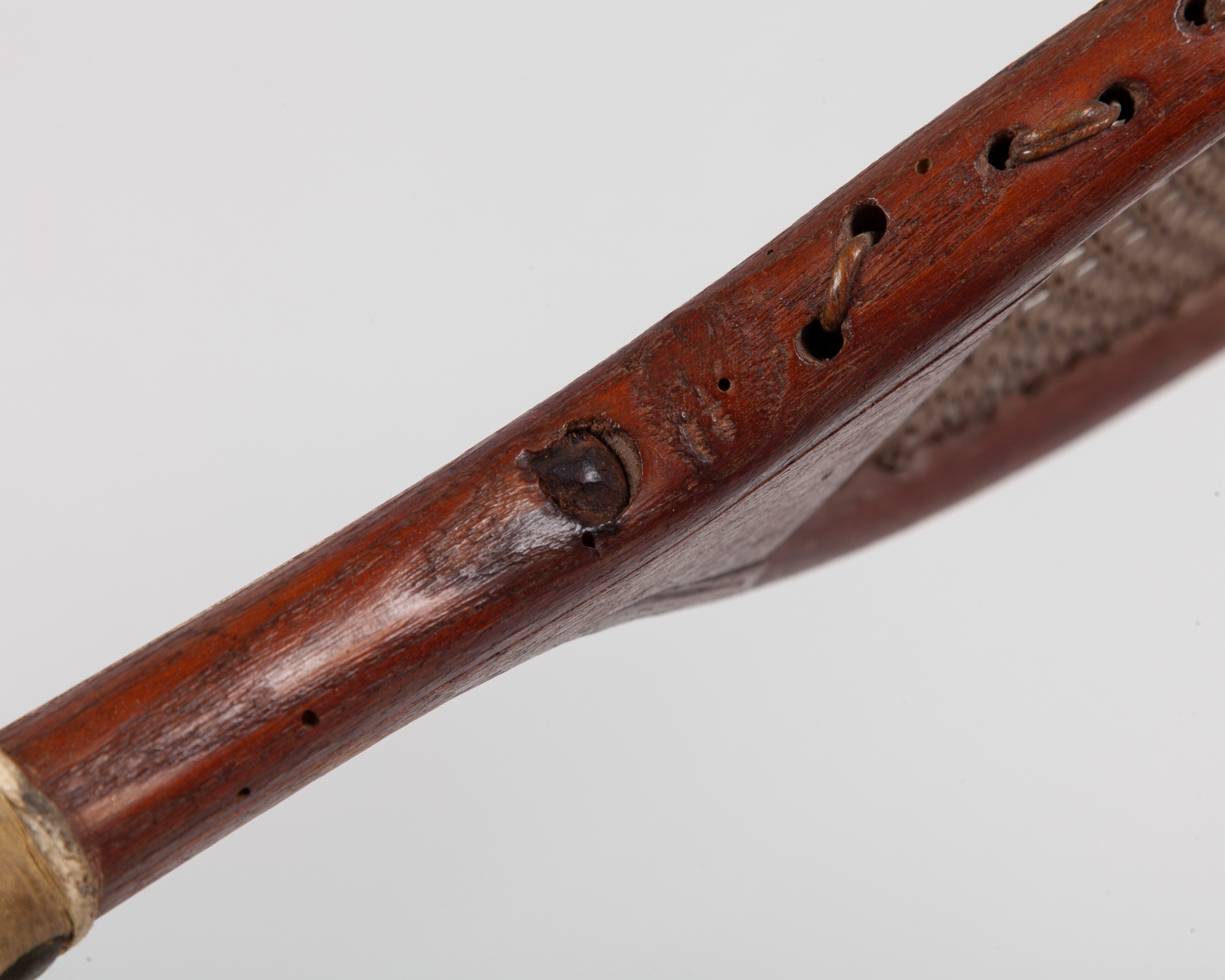
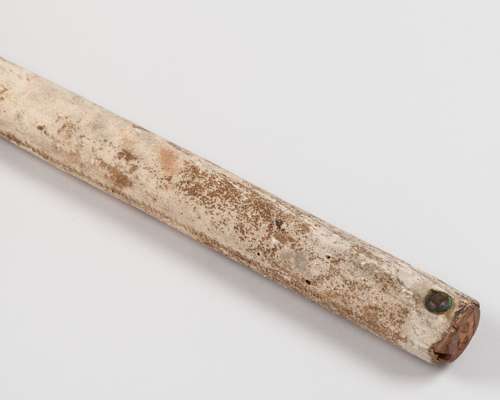
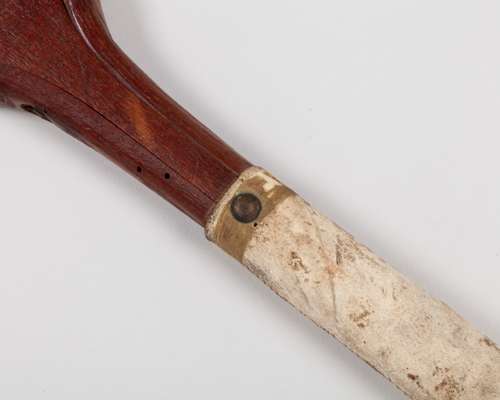
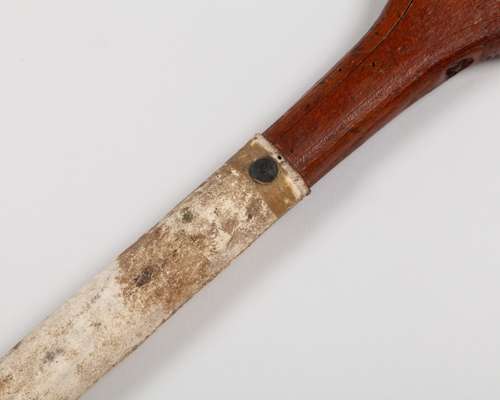
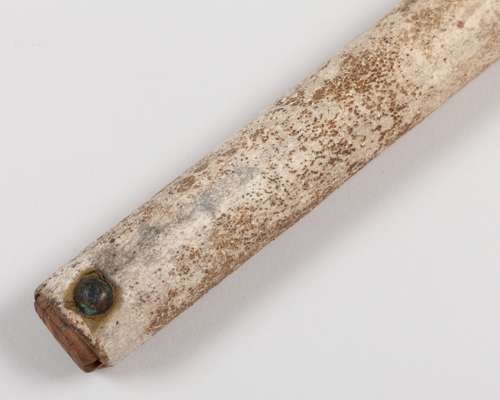
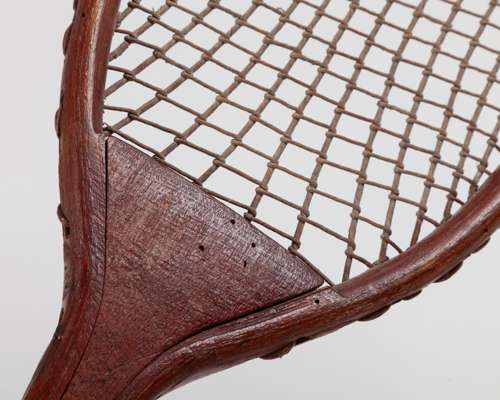
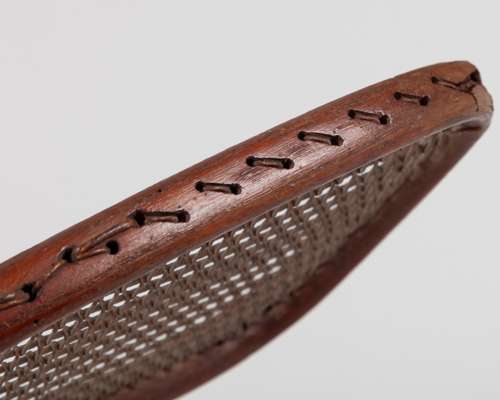
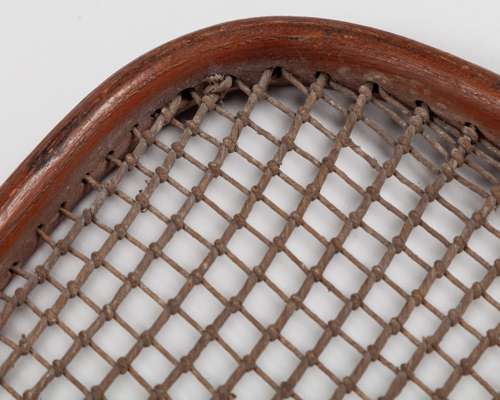
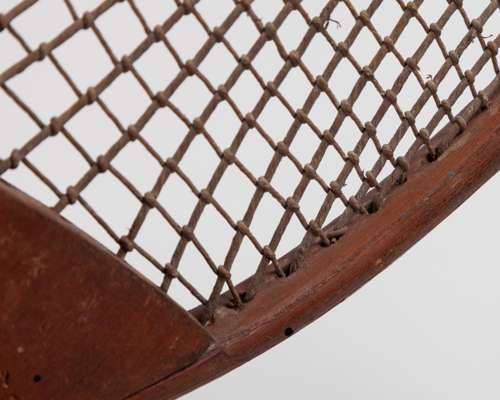
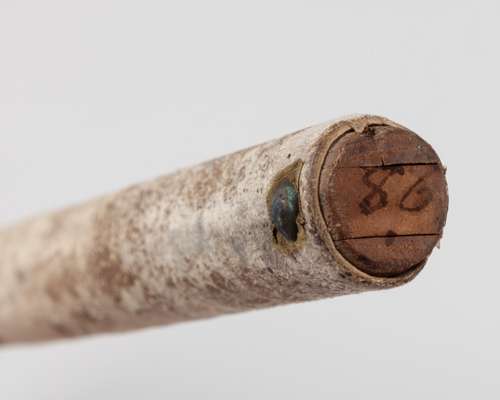
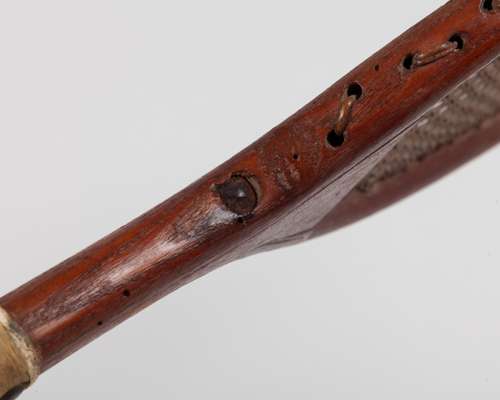
Racquets of this era were constructed from ash or basswood that was burnished in an oven with oak sawdust. The shaft has two large racquet nails. The Sheep gut cross strings are looped around the riser strings.
Small area of wood splitting to outside of one upper corner of the face, some exit hole damage and slightest separation to shaft.
In his work of 1767 ‘Art du paumier-raquetier et de la paume’, Garsault explains that there were three types of real tennis racquets made: Ordinaire, demi-paume & battoir. The Ordinaire was used with the standard, heavily weighted ball of about 60gr. and was of a robust construction accordingly. Masson’s racquet is a demi-paume and was used in matches using a half-weight 30gr. ball, so consequently the racquet is much lighter and slender in construction.
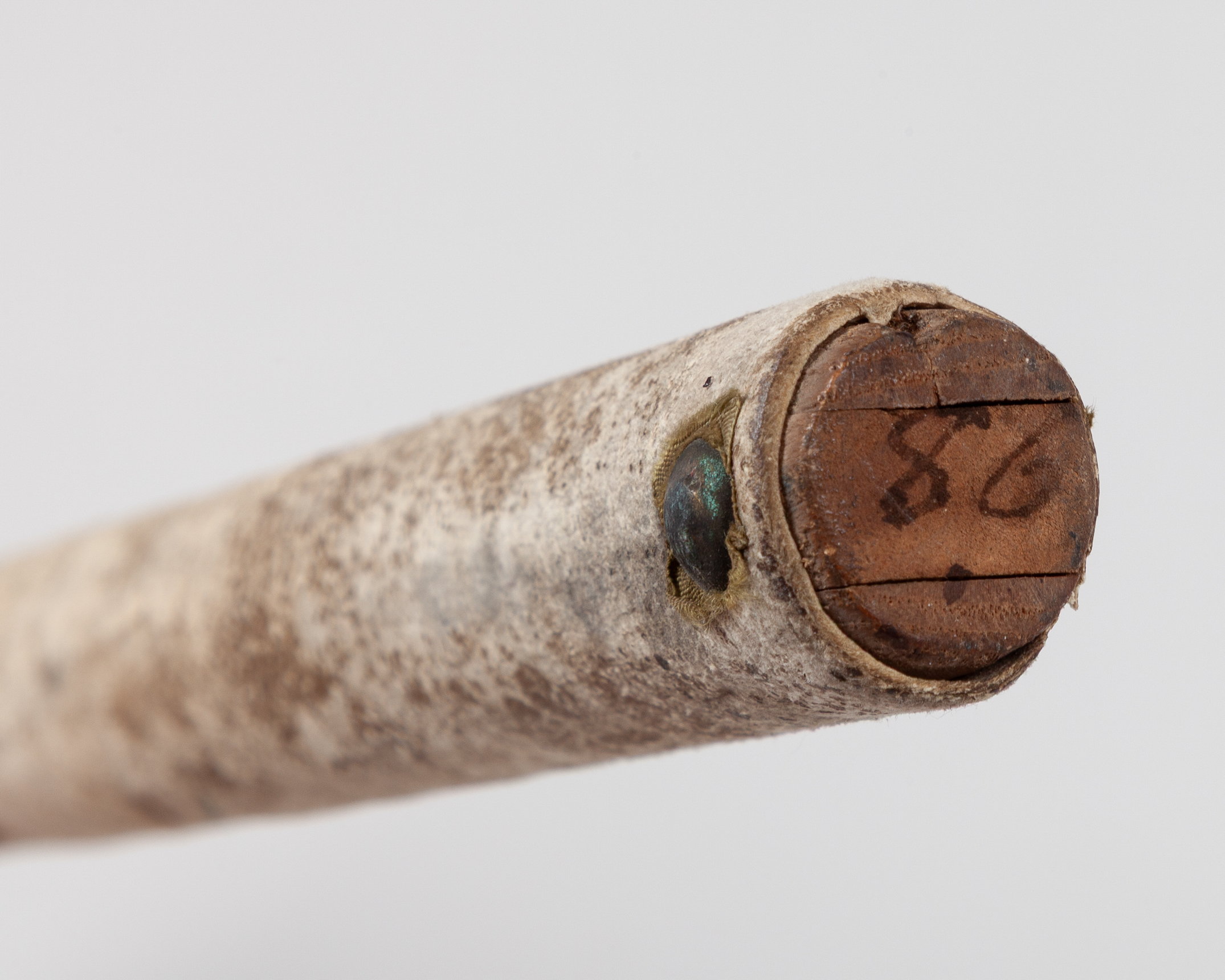
Weighing just 170grms. The length of the racquet is 55cm, the same length as a comparable racquet sold at Graham Budd Auctions in 2011 and 2022. The head at its widest is 16.5cm, the frame depth is 17mm whilst the handle gently flares to be 20mm at the butt end, with 98 written in ink.